San Diego's coastal terraces and inland mesas create a patchwork of soil behavior that shifts dramatically within just a few miles. You might hit clean sand in Mira Mesa and expansive clay in La Jolla the same week. That's why Atterberg limits testing isn't optional here. It's the quickest way to flag a soil that will swell, shrink, or lose strength when moisture changes. Our lab runs liquid limit and plastic limit per ASTM D4318 on every sample that passes through, often pairing the results with a grain size analysis to separate the clay fraction from the silt. For sites near the San Diego River or Mission Bay, where alluvial fines dominate, we routinely see plasticity indices above 25. The test gives contractors and geotechnical engineers a number they can use immediately in foundation selection and earthwork specs.
A plasticity index above 20 in San Diego's coastal clays means you are dealing with a soil that will move with every rainstorm.
Service characteristics in San Diego
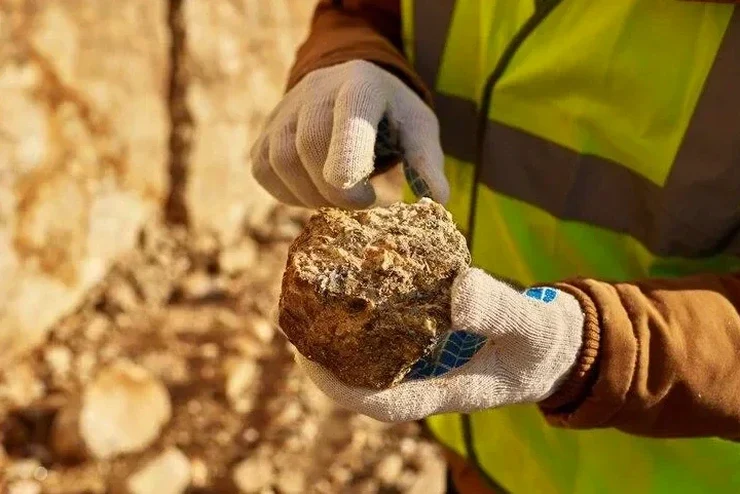
Local geotechnical conditions in San Diego
Ignoring the plasticity index in a city built on marine terraces and canyon fills is a direct path to structural distress. The IBC references ASTM D4318 results to classify expansive soils, and San Diego's building departments enforce those provisions strictly in areas like Carmel Valley and Rancho Peñasquitos, where Cretaceous and Tertiary sedimentary rocks weather into highly plastic clays. A soil with a liquid limit above 50 and a plasticity index over 30 will exert significant swelling pressure on shallow foundations. We've seen slab-on-grade floors lift two inches in a single wet winter because the Atterberg limits were never determined. The fix is always more expensive than the test. Our lab reports flag these high-plasticity materials with a note on the potential for volume change, giving the structural engineer a clear signal to consider deeper footings, moisture barriers, or even a post-tensioned slab design.
Our services
Our San Diego laboratory provides Atterberg limits testing as a standalone service or as part of a broader geotechnical characterization package. Each test report includes the liquid limit, plastic limit, plasticity index, and USCS classification.
Liquid Limit
Multi-point Casagrande cup method per ASTM D4318 to determine the moisture content at which soil transitions from plastic to liquid behavior.
Plastic Limit
Hand-rolling method to find the moisture content where a 3 mm soil thread begins to crumble, defining the lower bound of plasticity.
Plasticity Index & Classification
Calculation of PI and assignment of USCS group symbol per ASTM D2487, with commentary on expected shrink-swell potential for San Diego formations.
Frequently asked questions
How much does Atterberg limits testing cost in San Diego?
Atterberg limits testing in San Diego typically ranges from US$60 to US$90 per sample when performed as part of a standard geotechnical testing package. The price covers liquid limit, plastic limit, and the plasticity index calculation. Expedited turnaround may carry an additional fee.
What is the standard turnaround time for an Atterberg limits test?
Standard turnaround in our San Diego lab is 48 hours. The soil must be oven-dried, rehydrated, and equilibrated before testing. We can deliver results in 24 hours for rush projects when coordinated in advance.
Which San Diego soil formations most often require Atterberg limits testing?
We test samples from the Friars Formation, the Ardath Shale, and the stadium conglomerate soils frequently. These formations produce fine-grained materials with plasticity indices that can exceed 30, making them critical to characterize for any foundation design.