San Diego’s building codes enforce ASCE 7 and IBC seismic requirements for a reason. The Rose Canyon Fault runs right through the city, and the varied geology—from Mission Valley alluvium to decomposed granite in the foothills—demands foundation systems that distribute loads evenly over uncertain ground. A raft foundation design is often the most cost-effective solution when isolated footings would need to be oversized or when soil bearing capacity drops below 2,000 psf. Our team brings this analysis to projects ranging from coastal condos to inland industrial warehouses. We focus on soil-structure interaction parameters that keep differential settlement within tolerances, even on the expansive clay lenses common in neighborhoods like Clairemont and La Mesa. When site conditions are marginal, we often specify a plate load test to validate the modulus of subgrade reaction before finalizing the mat thickness and reinforcement schedule.
A uniformly thick mat over variable ground concentrates stress at the soft spots—we model the stiffness profile first, then decide the reinforcement scheme.
Service characteristics in San Diego
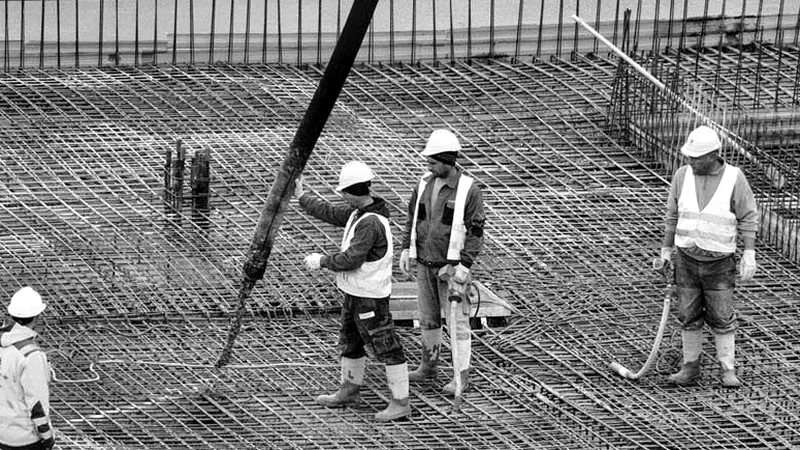
Local geotechnical conditions in San Diego
San Diego’s population surpassed 1.38 million in 2024, driving infill development onto sites that were bypassed for decades—canyon fills, former agricultural lowlands, and slopes with undocumented compaction. The 2010 Easter earthquake, a M7.2 event centered in Baja California, rattled high-rises downtown and reminded engineers that long-period ground motion amplifies in deep alluvial basins. A raft foundation design on these sites has to handle both static settlement and seismic overturning without relying on perimeter footings that could punch through undocumented fill. We evaluate liquefaction potential using SPT data per IBC guidelines, then specify thickened edges or strategically placed ground improvement—stone columns are one option we use to stiffen the soil mass and provide drainage paths, reducing the risk of bearing failure during a major event on the Rose Canyon or Elsinore fault systems.
Our services
We deliver complete design packages ready for plan check, with all calculations sealed by a California-registered engineer.
Full Mat Foundation Design & Analysis
3D finite element modeling of soil-structure interaction for slabs-on-grade and structural mats on compressible soils. We provide reinforcement plans, thickened edge details, and subgrade preparation specs.
Subgrade Investigation & Testing Program
Field and lab testing to determine the modulus of subgrade reaction, CBR, and consolidation parameters. We design the boring layout and testing sequence to capture lateral variability across the mat footprint.
Frequently asked questions
When does a raft foundation make more sense than isolated footings in San Diego?
When the allowable bearing pressure drops below 2,000 psf, or when the total footing area would cover more than half the building footprint. We see this a lot in Mission Valley and on engineered fill sites. A raft distributes column and wall loads across the entire plan area, reducing pressure on the soil and minimizing differential settlement between adjacent columns.
What does a raft foundation design cost for a typical San Diego project?
The engineering fee for a raft foundation design generally falls between US$910 and US$4,080, depending on the footprint size, number of load cases, and whether a site-specific seismic response analysis is required. A two-story mixed-use building in North Park will be on the lower end, while a multi-story structure on bay mud requires more modeling hours and runs toward the upper end.
How do you verify the subgrade modulus for the mat design?
We run field plate load tests at footing elevation to measure the modulus of subgrade reaction directly. Where access or budget constrains testing, we correlate the modulus from SPT blow counts and lab consolidation tests on undisturbed samples, then adjust for footing size and shape using established geotechnical correlations.