San Diego's coastal bluffs and inland mesas demand a proactive approach to excavation safety. IBC Chapter 33 and Cal/OSHA Title 8 require continuous monitoring when cuts exceed five feet, and the local geology—from the friable Lindavista Formation to saturated Bay Point deposits near the harbor—does not forgive shortcuts. Our instrumentation program tracks lateral deflection, vibration, and pore pressure shifts before they trigger a failure. For deeper cuts in the Stadium Conglomerate, we often pair surface settlement arrays with deep excavation instrumentation to maintain a live picture of the shoring system's response. The goal is simple: keep the crew safe and the schedule intact.
Real-time inclination data beats a post-failure investigation every time—especially in San Diego's layered Mesa and Hillside formations.
Service characteristics in San Diego
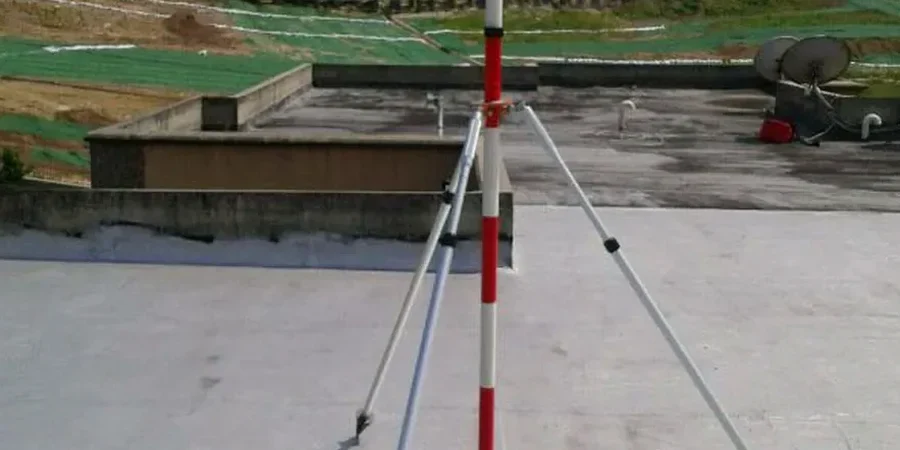
Local geotechnical conditions in San Diego
We see it too often: a contractor excavates through the Friars Formation on a tight timeline, skips the piezometer readings, and hits a lens of trapped groundwater that softens the toe of the shoring. The bench collapses overnight. In San Diego's canyon neighborhoods—Kensington, Mission Hills, La Jolla—the combination of steep natural slopes and aging utility trenches means settlement can propagate a block beyond the site. Ignoring a sudden spike in inclinometer data risks not just the excavation but the foundation of the 1920s bungalow next door. Our monitoring plan triggers a phone call the moment a reading crosses seventy percent of the design limit, so the shoring designer can adjust tieback tension before the problem shows up as a crack in the street.
Our services
We run instruments that give the project team a continuous health check on the excavation support system.
Inclinometer & Settlement Monitoring
Vibrating wire in-place inclinometers and digital settlement points installed along shoring walls and adjacent structures, with automated alerts tied to project-specific trigger levels.
Piezometer & Groundwater Tracking
Vented standpipe and vibrating wire piezometers to detect perched water in San Diego's mesa formations, helping prevent base heave and toe instability.
Vibration & Crack Monitoring
Triaxial geophones and mechanical crack gauges deployed on neighboring buildings and utilities, compliant with Cal/OSHA vibration thresholds during rock breaking.
Frequently asked questions
What does geotechnical excavation monitoring cost in San Diego?
A typical monitoring package for a single-family hillside excavation runs between US$780 and US$2,860, depending on the number of instrument stations and reporting frequency. Deeper commercial cuts with multiple inclinometer strings and automated data loggers fall on the higher end.
How often are monitoring readings taken on a San Diego project?
During active excavation we collect readings hourly on inclinometers and settlement points. Once the cut reaches final grade and the shoring is locked off, we typically step down to daily or weekly reads, depending on what the Geotechnical Engineer of Record specifies for the site conditions.
Do you need a monitoring plan for a small residential excavation in San Diego?
Yes, any cut over five feet deep that enters competent material still requires monitoring under Cal/OSHA if workers are inside. Even a backyard hillside excavation in areas like Mount Soledad or Point Loma can encounter unexpected groundwater or weathered rock that shifts more than the design anticipated.
What happens if an instrument reading exceeds the trigger level?
The field crew verifies the reading immediately with a manual measurement. If the exceedance is confirmed, we notify the contractor, the shoring designer, and the Geotechnical Engineer of Record within the hour so they can assess whether the excavation needs to be stopped, re-loaded, or if the support system requires additional tiebacks or bracing.