The biggest mistake we see on San Diego jobsites happens before the rig even shows up. Someone assumes the soil is just decomposed granite—because that is what they hit three blocks away—and they skip the SPT program. Then excavation reveals old fill from the mid-century housing boom, saturated lenses at 12 feet, and a refusal depth that does not match the structural calcs. Now the contractor is burning money on change orders while the engineer scrambles. San Diego’s geology is not uniform. Mesa tops, canyon fills, bay mud near the harbor, and alluvial pockets along the San Diego River create wildly different blow-count profiles within half a mile. An SPT drilling program with proper split-spoon sampling gives you the N-values and soil classification you actually need before a single footing goes in. We run the test per ASTM D1586 and log every 6-inch increment so no one is guessing about bearing capacity.
SPT blow counts from one San Diego mesa do not predict what sits under the next one—local geology changes too fast to skip the borehole.
Service characteristics in San Diego
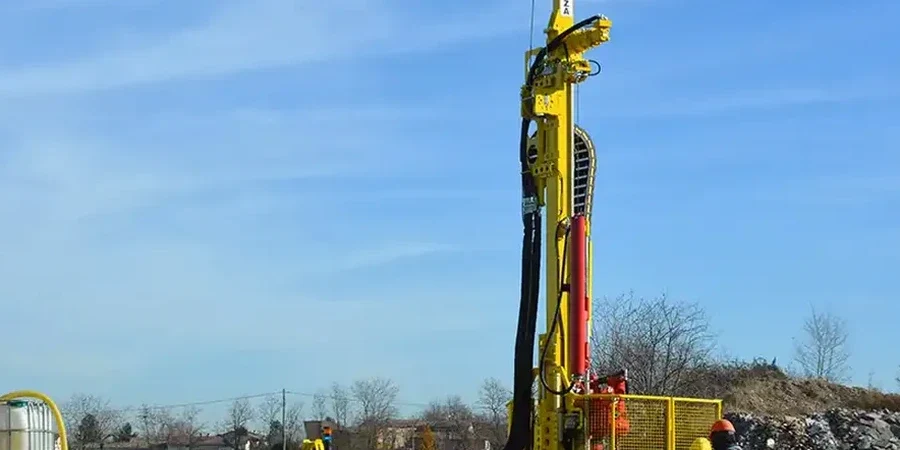
Local geotechnical conditions in San Diego
San Diego’s climate looks forgiving on paper—low rainfall, no freeze-thaw—but the coastal moisture cycle creates headaches that inland crews do not expect. Morning marine layer condenses on exposed borehole cuttings, and in canyon-bottom sites the shallow groundwater rises after winter storms, softening the bearing stratum just enough to drop N-values below what the foundation design assumed. Add seismic risk—the Rose Canyon Fault runs right through the city—and blow-count interpretation gets tied directly to liquefaction potential under ASCE 7 Chapter 20. If the SPT data is sparse or sloppy, the engineer cannot rule out cyclic mobility in the saturated sand layers, and the project ends up over-designed on deep foundations or under-designed on a mat slab. We log groundwater level at the time of drilling and again 24 hours later, because in San Diego’s coastal terraces that number can shift several feet between morning and afternoon.
Our services
Our San Diego SPT program is built around three core services that cover the full workflow from field drilling to final boring log.
SPT Drilling and Field Sampling
Mobile rig deployed to your site across San Diego County. Split-spoon sampling at specified intervals with real-time blow-count recording. We handle traffic control permits for urban sites and coordinate with utility locating services before mobilization.
Soil Classification and Logging
Samples classified in our lab under ASTM D2487. Boring logs include N-values, moisture content, color, consistency, and stratigraphic descriptions that match the USCS nomenclature required by review agencies.
Liquefaction Screening Data Package
For sites in San Diego’s seismic hazard zones, we provide formatted SPT datasets ready for liquefaction analysis. Includes fines content, groundwater depth, and N-value profiles that plug directly into Seed-Idriss or CPT-based triggering methods.
Frequently asked questions
How long does an SPT boring take on a typical San Diego residential lot?
For a standard 30-foot boring in accessible terrain—say a single-family lot in Clairemont or Mira Mesa—we usually finish drilling, sampling, and logging in four to six hours. If the site is on a steep canyon slope or requires hollow-stem auger through caving soils near a coastal bluff, add a few hours for setup and casing. We can typically deliver the draft boring log within two business days.
What does SPT testing cost per borehole in San Diego?
SPT boreholes in San Diego generally run between US$540 and US$820 per boring, depending on depth, access, and whether we need traffic control or extra casing. A typical residential project with two 30-foot borings falls in the lower end of that range; deeper commercial borings with mud rotary in difficult ground push toward the upper end.
Do I need SPT borings if I already have CPT data for my San Diego site?
CPT gives you continuous tip resistance and sleeve friction, and it is great for stratigraphic profiling and liquefaction screening. But CPT does not retrieve a physical soil sample. Many San Diego geotechnical reviewers still want split-spoon samples for visual classification, moisture content, and Atterberg limits. We often combine the two—run CPT for the continuous profile, then supplement with one or two SPT borings to pull samples at critical depths.