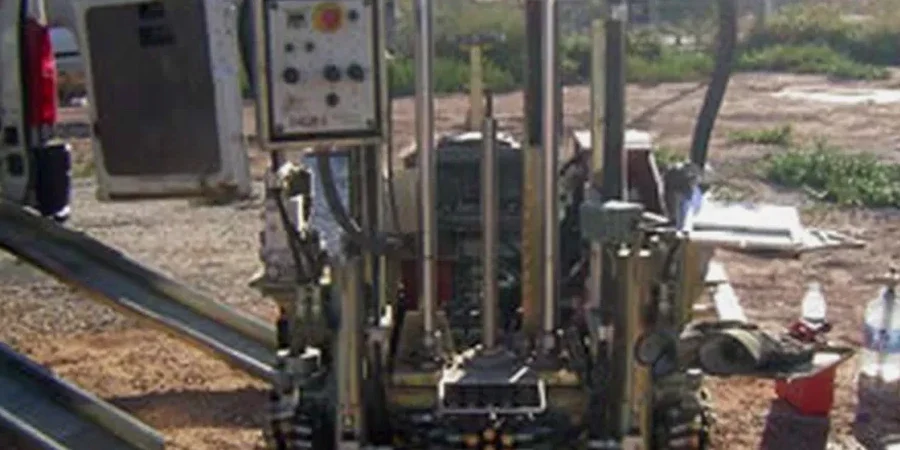
A new mixed-use development on the edge of Mission Valley hit a snag last fall. The upper soil profile looked like standard alluvium, but the client needed to confirm bearing capacity without the delays of traditional rotary drilling. That’s where the cone penetration test proved its value — the rig was on site by 7 AM, and by noon the engineer had a continuous profile of tip resistance and sleeve friction down to 65 feet. In a city shaped by coastal bluffs, river terraces, and liquefiable bay deposits, CPT testing delivers the subsurface clarity that drives smart foundation decisions. San Diego’s seismic setting — just 120 miles from the San Andreas Fault — means every project benefits from precise stratigraphy. We run electronic cone rigs on truck-mounted and crawler platforms, adapting to tight downtown lots near Petco Park or the sandy benches of La Jolla. The data feeds directly into liquefaction assessments and deep foundation modeling, aligning with the California Building Code and ASCE 7 requirements. For sites where SPT drilling is also planned, we often sequence both tests to correlate soil behavior index and N-values across the entire project footprint.
Continuous CPT profiling in San Diego's bayfront sediments reveals liquefaction susceptibility in a single afternoon — data that would take a week of conventional drilling to approximate.
Service characteristics in San Diego
Local geotechnical conditions in San Diego
Downtown San Diego high-rises and Otay Mesa warehouses face radically different subsurface conditions — yet both can encounter problems when the ground isn’t properly profiled. In the marina district, artificial fill over bay mud creates a classic liquefaction trap: loose sands that lose strength under seismic shaking. A CPT-based liquefaction triggering analysis using the Robertson or Boulanger & Idriss methods quantifies the factor of safety at every depth, letting the structural engineer decide between densification, stone columns, or a deep pile solution. Inland, in the Sorrento Valley area, the risk shifts to soft clays with low undrained shear strength — no shaking needed for settlement to occur under heavy floor loads. The cone penetration test measures undrained strength directly through the cone factor Nkt, identifying weak layers that would be missed by standard penetration testing alone. Even on the seemingly stable mesas of Scripps Ranch, buried channels filled with colluvium can create differential settlement that cracks slabs within the first five years. A continuous CPT sounding reveals these hidden channels by the sharp drop in tip resistance at the channel boundary — information that isolated SPT blows simply cannot provide. San Diego’s combination of seismic hazard Zone 4 and highly variable Quaternary deposits makes the CPT an essential tool for any project where settlement tolerance is tight.
Our services
Our CPT services in San Diego are structured around the specific demands of coastal California construction. Whether the project is a single-family residence on a canyon rim or a multi-story structure in the Gaslamp Quarter, we configure the cone rig, penetrometer, and data reduction to match the site geology. The two core CPT packages cover the majority of San Diego geotechnical investigations.
Seismic Piezocone (CPTu) with Liquefaction Analysis
Full electronic cone with pore pressure measurement for sites in Seismic Design Category D or E. Includes dissipation tests at specified intervals, soil behavior type profiling, and a complete liquefaction triggering report using the current ASCE 7 ground motion parameters for San Diego. Suitable for mid-rise and high-rise foundations, retaining walls, and any project within the city’s designated liquefaction hazard zones.
CPT for Shallow Foundation Verification
Focused cone penetration testing to 30–50 feet depth, optimized for spread footings and mat foundations. Delivers continuous tip resistance and sleeve friction profiles correlated to drained friction angle and undrained shear strength using published San Diego region calibrations. Ideal for commercial pads in Kearny Mesa, Miramar, and the Otay Mesa industrial corridor where bearing capacity and settlement control are the primary geotechnical concerns.
Frequently asked questions
How deep can a CPT rig push in San Diego soils?
It depends entirely on the subsurface material. In the alluvial valleys like Mission Valley and the San Diego River floodplain, our 20-ton truck-mounted rig routinely reaches 65 to 80 feet before encountering refusal. In areas underlain by the Stadium Conglomerate — a notoriously dense Pleistocene formation common in Mission Hills and parts of Serra Mesa — refusal can occur as shallow as 15 to 25 feet. We always review nearby geotechnical logs and geologic maps before mobilizing to estimate the expected refusal depth and select the appropriate pushing capacity.
What does a CPT test cost for a typical San Diego project?
For most residential and light commercial sites within San Diego County, CPT investigation costs range from US$180 to US$270 per sounding hour, depending on depth, access constraints, and whether pore pressure dissipation testing is required. A single-family lot investigation with two to three soundings to 40 feet typically falls on the lower end of that range. Downtown or hillside locations with limited rig access may require a smaller crawler unit, which affects the mobilization rate. We provide a flat-rate quote after reviewing the site address and project scope.
Is CPT better than SPT for liquefaction assessment?
For liquefaction evaluation, the CPT offers several technical advantages over SPT. The cone provides a nearly continuous profile of soil resistance — typically a reading every 2 to 5 centimeters — versus the 5-foot intervals of standard penetration testing. This high-resolution data captures thin liquefiable layers that SPT can easily miss. Additionally, the CPT eliminates the hammer energy corrections, rod length corrections, and sampler disturbance variables inherent in SPT. The normalized cone resistance (qc1N) and soil behavior type index (Ic) feed directly into the Robertson (2009) and Boulanger & Idriss (2014) triggering procedures, which are the standard of practice in Southern California. That said, SPT does provide a physical sample for visual classification and laboratory testing, so many San Diego projects use a hybrid approach: CPT for stratigraphic profiling and liquefaction screening, supplemented by a few SPT borings for material verification.
How long does a CPT investigation take, and what access do you need?
A standard CPT sounding to 60 feet in San Diego alluvium takes about 45 to 90 minutes of pushing time, plus setup and breakdown. For a typical commercial lot requiring four to six soundings, the field crew can complete the work in a single day. Our truck-mounted rig needs an 8-foot-wide access path and reasonably level ground; for steep hillside lots in neighborhoods like Mount Soledad or La Jolla Heights, we deploy a compact crawler unit that fits through a standard 4-foot gate. We handle the encroachment permits if soundings are required in the public right-of-way. The client receives the preliminary digital logs within 24 hours of field completion, with the final interpreted report following in three to five business days.