We've seen it too many times: a contractor assumes a few standard tiebacks will hold a shoring wall in downtown San Diego, only to face excessive deflection during excavation. The problem isn't always the anchor capacity itself, it's the bond zone. In the stadium area, for instance, the younger alluvial deposits simply don't grip the grout the same way the older, overconsolidated units do further east. Our anchor design approach starts with a detailed look at the subsurface, not a catalog value. We combine in-situ testing with our CPT testing program to map the stratigraphy continuously, and then we define whether an active anchor system with locked-off prestress or a passive system relying on ground deformation makes more sense for your specific project geometry and adjacent structures.
In San Diego's coastal terraces, the difference between active and passive anchor design often comes down to whether you can tolerate half an inch of movement.
Service characteristics in San Diego
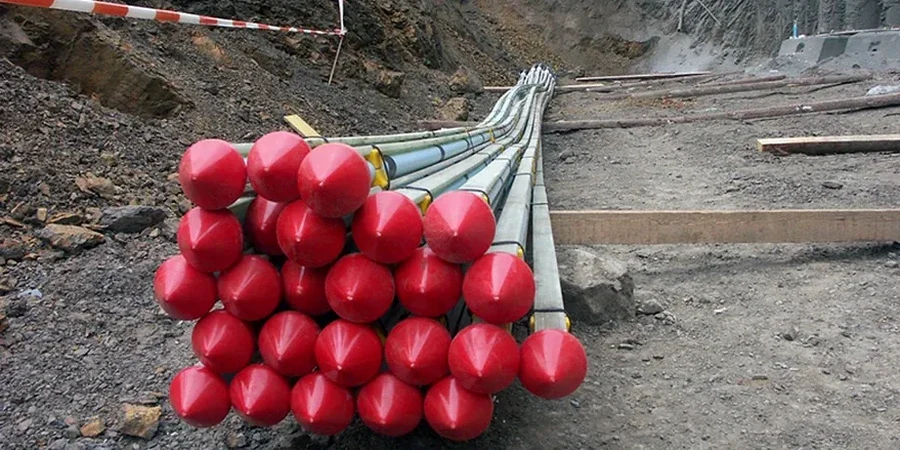
Local geotechnical conditions in San Diego
The soil conditions between La Jolla and East Village present fundamentally different challenges for anchor design. In La Jolla's coastal bluffs, we're often anchoring into the fractured, moderately cemented sandstone of the Bay Point Formation, where the risk is not low pullout capacity but rather progressive corrosion from salt spray and groundwater salinity. We specify Class II encapsulation with factory-applied corrugated sheathing as a baseline there. Contrast that with the downtown high-rises in the East Village, where the main concern is interacting with existing underground utilities and deep foundations from demolished structures. We routinely run our anchor trajectories through a 3D clash analysis using existing as-built records. The biggest oversight we correct is ignoring the long-term load behavior in passive anchors; if the ground creeps over time, a passive bar can lose its grip, while a properly locked-off active anchor maintains its force. In San Diego's seismic environment, we also check for cyclic degradation of bond stress as required by ASCE 7 Chapter 18.
Our services
Our anchor design package includes full submittal-ready documentation, but we also provide field support during the critical installation phase. Here are the core components:
Anchor Load Test Supervision
We provide on-site direction for performance and proof tests, interpreting load-extension curves to validate design assumptions and adjust bond lengths in real time.
Lateral Earth Pressure Analysis
Our team uses both limit equilibrium and finite element methods to model the actual stress distribution behind the shoring wall, accounting for surcharge from adjacent footings or traffic loads.
Corrosion Risk Assessment
Based on soil resistivity and pH testing, we classify the site's aggressiveness and specify the required level of grout encapsulation and tendon protection per PTI guidelines.
Frequently asked questions
What is the price range for an anchor design package in San Diego?
A complete design package for a typical shoring project, including calculations, plans, and load test specifications, typically ranges from US$920 for a small retaining wall with a few anchors up to US$4,290 for a complex deep excavation with multiple anchor rows and seismic analysis.
When do you choose active anchors over passive ones?
Active anchors are pre-stressed and locked off to actively apply a load to the wall, which minimizes movement. We use them when adjacent structures or utilities have tight settlement criteria. Passive anchors, like soil nails, depend on ground deformation to mobilize resistance, so they're better suited for sites where some lateral movement is acceptable.
How do you account for San Diego's seismic activity in anchor design?
We follow the seismic provisions in ASCE 7 Chapter 18, which requires considering the inertial effects from the retained soil mass and potential reduction in bond strength during cyclic loading. We often increase the unbonded length in the free zone to accommodate the lateral spread expected during the design earthquake.
What documentation do you provide for the permit review in the City of San Diego?
Our submittal package includes signed and sealed anchor design calculations, detailed plan sheets showing anchor locations, inclination, and tendon details, corrosion protection specifications, and a complete load testing schedule. This package is prepared to meet the City of San Diego Development Services Department requirements and the current California Building Code.