San Diego pavement engineering demands more than a generic catalog section. Caltrans Highway Design Manual Chapter 630, AASHTO 1993/2020 design guides, and the city’s Standard Drawings all require project-specific geotechnical inputs—especially in a metro area where subgrade can change from Point Loma Formation sandstone to Mission Valley alluvium within half a mile. The flexible pavement design process here starts with resilient modulus characterization and drainage evaluation, not with an assumed structural number. When the subgrade includes moisture-sensitive fine sands common in coastal terraces, the design must account for seasonal modulus reduction. For projects east of I-15, expansive clay behavior often controls the base thickness, and we frequently pair the pavement analysis with a CBR road subgrade study to calibrate the structural coefficient before finalizing the asphalt concrete and aggregate base layers.
A pavement design calibrated to San Diego’s real subgrade variability avoids the fatigue cracking that generic sections suffer after two wet winters.
Service characteristics in San Diego
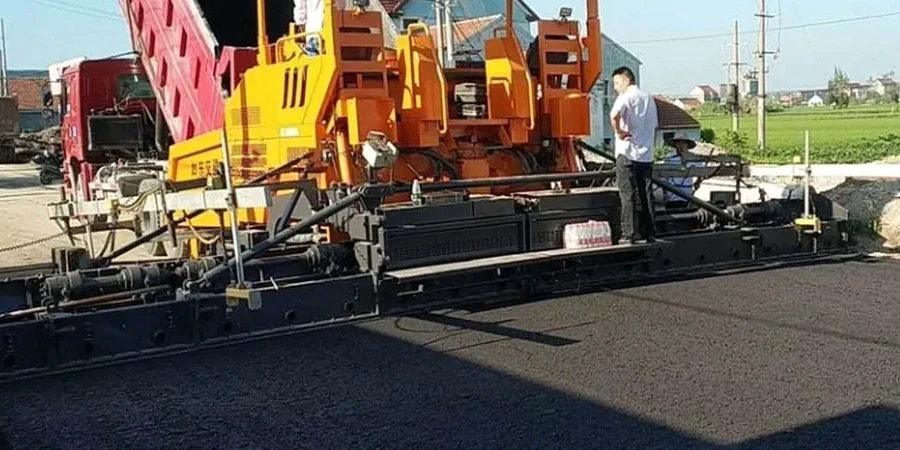
Local geotechnical conditions in San Diego
In San Diego, we often see pavement distress concentrated in exactly the zones where the geotechnical report stopped short of the pavement design. The most expensive failures are not structural collapses; they are premature fatigue cracking and rutting that appear 3 to 5 years after opening—driven by untreated expansive subgrades or base courses that could not drain under the winter rainfall cycle. A flexible pavement section designed without a site-specific saturation study will trap water in the aggregate base, and in the flat grades of Mission Valley or Sorrento Valley that water has nowhere to go. The result is a 50% loss of structural life before the first overlay. The risk compounds when the traffic forecast undercounts the heavy vehicle mix; a pavement designed for 2 million ESALs that actually carries 4 million will reach terminal serviceability in half the intended period. The plate load testing protocol we use on the finished subgrade provides an independent verification that the design modulus exists in the field—not just in the laboratory report.
Our services
Our pavement design workflow in San Diego County covers the full chain from subgrade investigation to final cross-section. These two service lines handle the most common project types we see.
Pavement Structural Section Design
Complete AASHTO/Caltrans-compliant flexible pavement design including subgrade characterization, traffic loading analysis, and layer coefficient optimization. Deliverables include design report with structural number calculations, cross-section drawings, and construction specifications for asphalt concrete, aggregate base, and subbase courses.
Subgrade Evaluation and Rehabilitation Design
Field and laboratory program to determine in-situ resilient modulus, R-value, and moisture sensitivity of existing subgrade. For rehabilitation projects, we perform deflection testing and back-calculation to identify remaining structural capacity, then design the overlay thickness or full-depth reclamation section needed to meet the extended service life.
Frequently asked questions
What is the typical flexible pavement design procedure for a San Diego project?
The workflow follows the AASHTO empirical method adopted by Caltrans: first, the subgrade resilient modulus (Mr) or R-value is determined through laboratory testing of site-specific samples. Then, the design traffic is converted to 18-kip equivalent single-axle loads (ESALs) for the design period—typically 20 years for arterials, 30 for freeways. The structural number required is calculated from the AASHTO design equation using the subgrade modulus, traffic, reliability level, and serviceability loss. Finally, layer coefficients are assigned to the asphalt concrete, base, and subbase courses to achieve the target structural number, with drainage coefficients adjusted for local groundwater and rainfall conditions.
How much does a flexible pavement design cost in San Diego?
The fee for a flexible pavement design report typically falls in the range of US$1,870 to US$4,610, depending on the project length, number of traffic lanes, and the scope of subgrade investigation required. A short residential street with existing geotechnical data will be at the lower end; a multi-lane arterial with new soil borings, R-value testing, and a full traffic analysis will approach the upper end. All quotes include the design memorandum, structural calculations, and coordination with the civil engineer on grading and drainage.
What subgrade tests are required before starting the pavement design?
As a minimum, we need the subgrade resilient modulus (Mr) or R-value from representative samples across the alignment. Supplementary tests usually include Atterberg limits to assess expansive potential, sieve analysis for gradation, and modified Proctor compaction curves. If the subgrade is within 3 feet of the groundwater table or in a known moisture-sensitive formation like the Friars Formation, we add a saturation study to determine the modulus reduction under worst-case moisture conditions.
Does the design account for the different soil conditions across San Diego County?
Absolutely. The design is segmented by subgrade unit: a stretch through Linda Vista Formation conglomerate will have a different structural section than an adjacent stretch through alluvial clay. We tie the soil boring logs directly to the pavement design chainage, so each homogeneous section gets its own structural number calculation. This approach prevents the common mistake of applying a single “worst-case” design to the entire project, which either overspends on asphalt or leaves weak zones under-designed.