San Diego's distinctive topography of mesas, canyons and coastal bluffs creates a natural laboratory for slope instability. The mix of weathered granitic soils, friable sandstone formations like the Friars Formation and thinly bedded shale layers means even a 15-foot cut can trigger a progressive failure if groundwater isn't accounted for. From Rancho Peñasquitos to La Jolla's eroding sea cliffs, a proper slope stability analysis must reconcile the region's semi-arid climate with episodic El Niño rainfall that saturates colluvial fills in hours. Our laboratory runs direct shear and ring shear tests under ASTM D3080 and D6467 protocols, feeding parameters into limit equilibrium models that reflect the real stratigraphy encountered in the field. That same weathered profile also benefits from a test pit investigation to map the contact between residual soil and weathered bedrock before any benching geometry is finalized.
A factor of safety of 1.5 for static conditions tells only half the story — the real margin emerges when you superimpose a 475-year seismic event on a slope already at 90% saturation.
Service characteristics in San Diego
- Use of high-resolution LiDAR DEMs to map pre-existing geomorphic features
- Back-analysis of nearby failed slopes to calibrate strength parameters
- Probabilistic assessment yielding reliability index alongside deterministic FoS
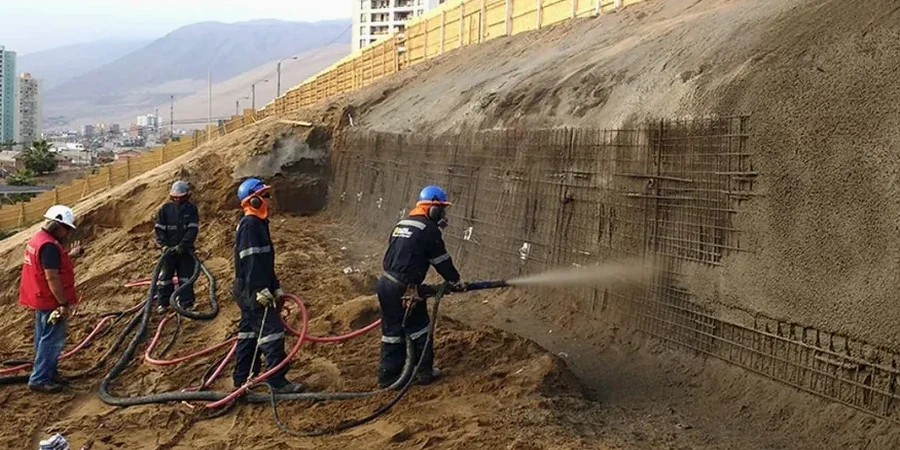
Local geotechnical conditions in San Diego
The contrast between San Diego's dry summer chaparral and the intense winter pulses of atmospheric rivers defines the slope risk profile. Native vegetation like coastal sage scrub masks desiccated clay layers that lose suction rapidly when the first rains arrive, dropping the apparent cohesion that kept a 2:1 cut stable through October. Homeowners in neighborhoods such as Mount Soledad or Del Cerro discover this when a January storm triggers a shallow translational slide that carries part of the backyard with it. The cost of ignoring a site-specific slope stability analysis escalates quickly: emergency shoring, debris removal, SWPPP violations if sediment reaches a drainage course, and potential litigation if a neighboring property is undermined. A study that quantifies the rainfall threshold for failure gives the civil engineer a defensible basis for drainage design and setback distances.
Our services
We deliver slope stability services tailored to the regulatory environment of Southern California and the geologic conditions of the Peninsular Ranges province:
Residential Hillside Stability Package
Geologic mapping, subsurface exploration with bucket auger borings, laboratory strength testing on undisturbed samples, and 2D limit equilibrium modeling in Slide2 or Slope/W. Delivers a signed report meeting City of San Diego Development Services submittal requirements for single-lot grading permits.
Infrastructure and Canyon Stabilization
Multi-cross-section analysis for road widenings, bridge abutments and utility corridors traversing canyon slopes. Incorporates rockfall trajectory simulation when Mesa sandstone overlies softer Friars Formation, plus rapid drawdown scenarios for reservoir-adjacent slopes.
Frequently asked questions
What does a slope stability analysis typically cost in San Diego?
Costs range from US$1,160 for a simplified infinite-slope model on a small lot with existing soils data, up to US$4,600 for a complete 2D limit equilibrium study involving multiple cross sections, laboratory shear testing and seismic pseudo-static analysis. The final figure depends on the height of the slope, complexity of the stratigraphy and whether the City requires a peer review.
How long does the slope stability study take from field work to final report?
A standard residential slope analysis in San Diego takes two to three weeks. Drilling or test pitting consumes one to two days, laboratory direct shear and triaxial tests require seven to ten days for completion, and the modeling plus report drafting takes an additional week. Projects needing geological clearance from a City reviewer may extend the timeline by a few days.
Do I need a slope stability analysis if my lot is nearly flat but backs up to a steep canyon?
Yes, and this is one of the most common triggers in San Diego. Even if your building pad is flat, the proximity to a canyon rim activates the setback requirements in the Municipal Code. A stability analysis must demonstrate that your proposed foundation loads will not reduce the factor of safety of the canyon slope below 1.5, and that the slope itself poses no risk of retreat undermining your property.