A six-story mixed-use project in Mission Valley hit refusal at 35 feet. The geotechnical report showed loose, saturated sand down to 60 feet. Shallow footings were out. Deep foundations would have blown the budget. The solution was a stone column grid designed to densify the sand and provide drainage. San Diego’s coastal plains and river valleys are full of these soft deposits. We see it from Otay Mesa up to Sorrento Valley. The design isn’t just about spacing and diameter. It’s about understanding how the columns interact with native soil during a seismic event. That’s where local experience matters. We feed site-specific CPT data into the model. The output is a layout that meets settlement tolerances and liquefaction mitigation targets. For projects where vibro-replacement alone isn’t enough, we pair the design with a liquefaction analysis to confirm post-treatment performance under the design earthquake.
A well-designed stone column grid can double the bearing capacity of loose alluvial sand while providing a drainage path for excess pore pressure during an earthquake.
Service characteristics in San Diego
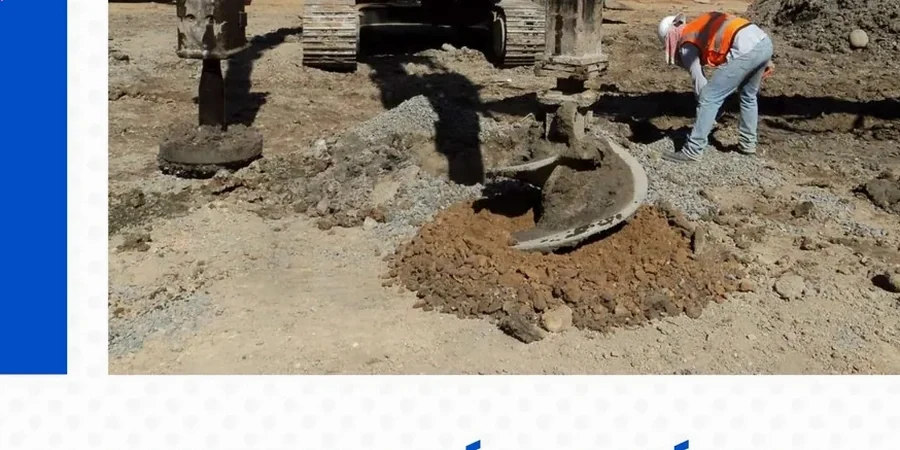
Local geotechnical conditions in San Diego
We’ve seen projects where stone columns were installed without a site-specific design. The contractor used a generic grid. Spacing was too wide. Settlement exceeded 2 inches in the first year after construction. The owner had to inject grout under the slab. That’s an expensive fix. In San Diego’s alluvial basins, the soft layer thickness can change by 15 feet across a single lot. A design that works at one corner may fail at the other. We’ve pulled CPT logs from two borings 100 feet apart that showed completely different soil profiles. That’s why we never design from a single boring. We require at least three investigation points. The design must also consider the water table. In areas like the San Diego River floodplain, groundwater is only 8 to 12 feet below grade. Wet installation methods need to account for fines migration and borehole stability.
Our services
Our stone column design service covers the full workflow: from initial feasibility assessment through final as-built verification. Each phase is documented and stamped by a California-licensed geotechnical engineer.
Feasibility Study
We review existing geotechnical data and determine if stone columns are technically viable for your site. This includes a preliminary liquefaction screening and settlement estimate.
Design Package
Stamped drawings and specifications. Includes column layout, depth, diameter, aggregate requirements, installation sequence, and performance criteria.
Test Section Program
We design a test section with 4 to 6 columns. Post-installation CPT testing verifies that the actual densification matches the design assumptions before full production.
As-Built Verification
After production installation, we perform modulus tests or plate load tests at select locations. The final report confirms that acceptance criteria are met.
Frequently asked questions
What does stone column design cost in San Diego?
A full design package for a typical commercial lot ranges from US$1,680 to US$5,740, depending on project size, number of borings reviewed, and whether a test section program is included.
How long does the design process take?
A feasibility assessment with preliminary layout takes 5 to 7 business days after we receive the geotechnical report. A full stamped design package with specifications is typically ready in 2 to 3 weeks.
Can stone columns replace deep foundations entirely?
In many cases, yes. For loads up to about 6 ksf on soft sandy soils, stone columns can eliminate the need for driven piles or drilled shafts. For heavier loads or very thick soft clay layers, we may combine stone columns with a structural mat foundation.